Familiar Songs - Their Authors & Histories
300 traditional songs, inc sheet music with full piano accompaniment & lyrics.
|
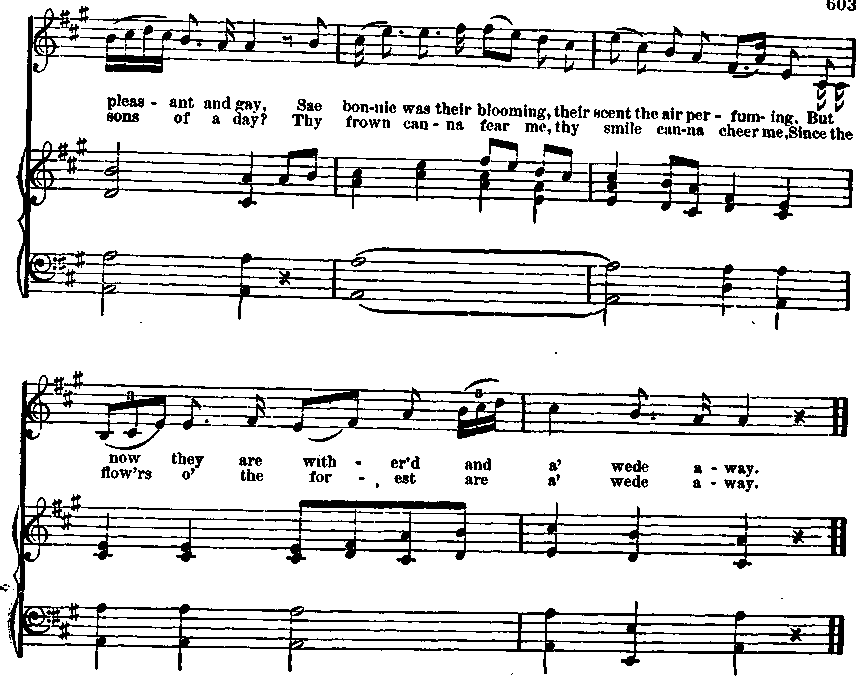
THE FLO WERS OF THE FOREST |
|||||||||||||||
 |
|||||||||||||||
|
A MAN'S A MAN FOR A' THAT.
In the letter to Mr. Thomson, the Scottish song-collector, which accompanied the first copy of his song " A Man's a Man for a' That," Burns wrote: " A great critic, Aiken, on songs, says that love and wine are the exclusive themes for song-writing; the following is one on neither subject, and consequently is no song, but will be allowed, I think, to be two or three pretty good prose thoughts inverted into rhyme."
The world had decided against Mr. Aiken, and Beranger, — who is called the Burns of Prance,—used to say that this song was not a song for one age, but for an eternity. It seems to me that Burns describes it correctly. |
|||||||||||||||
|
i |
^E |
£ |
m |
; |
mm |
£ |
|||||||||
|
^ |
i± |
||||||||||||||
|
1. Is there for hon-est pov-er - ty That hangs his head, an' a' that? The cow-ard slave we
2. What though on hamely fare we dine,Wear hod-den-gray, and a' that, Gie fools their silks, and
3. Ye see yon birk - ie, ca'ed a lord, Wha struts and stares, and a' that, Tho' hundreds worship |
|||||||||||||||
|
P |
±L |
-i- |
£ |
4- |
|||||||||||
|
£ |
|||||||||||||||
|
* |
=*= |
||||||||||||||
|
P |
|||||||||||||||
|
tfcfc |
fcEEEt |
±± |
£ |
||||||||||||
|
E |
i |
||||||||||||||
|
f |
|||||||||||||||
|
=P |
|||||||||||||||
|
:#: |
-f- |
||||||||||||||